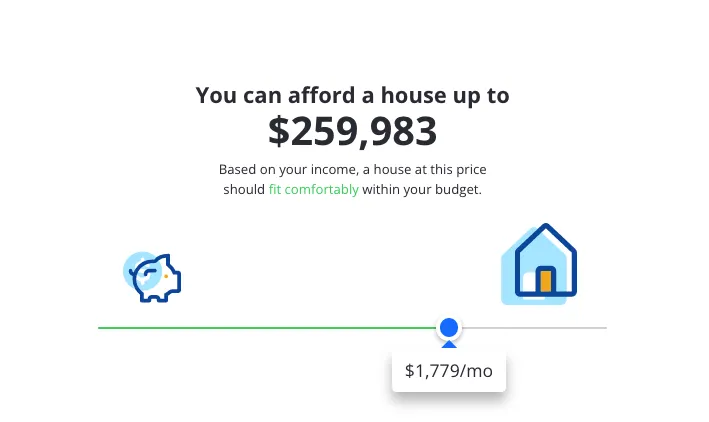
In the SEO world, we always talk about “Search Intent.” Before you build a page, you have to know if you can actually rank for it. Buying a home is no different. Before you start touring open houses, you need to perform a technical audit of your finances to answer the most critical question in real estate: how big of a mortgage can I afford?
As of April 18, 2026, the housing market has entered a “stabilization phase.” We are no longer seeing the 8% interest rate peaks of late 2023, but we also aren’t in the 3% “legacy” era. With 30-year fixed rates currently hovering around 6.30%, your purchasing power is a moving target.
In this comprehensive 3,000-word guide, we will look at the “back-end” algorithms that lenders use to judge your application, the impact of current rates, and the hidden “metadata” of homeownership costs.
1. The “28/36 Rule”: Your Financial Sitemap
Just as a website needs a clear structure to rank, your mortgage application needs a clear ratio. Most lenders follow the 28/36 rule to determine how big of a mortgage can I afford.
- The 28% Rule (Front-End Ratio): Your total monthly housing payment (Principal, Interest, Taxes, and Insurance—PITI) should not exceed 28% of your gross monthly income.
- The 36% Rule (Back-End Ratio): Your total debt payments (including the new mortgage, car loans, student loans, and credit cards) should not exceed 36% of your gross monthly income.
If you earn $10,000 a month, the “algorithm” suggests your mortgage payment shouldn’t exceed $2,800. If you have a $500 car payment, your total debt ceiling is $3,600, leaving exactly $3,100 for your home. This simple math is the first step in answering how big of a mortgage can I afford.
2. The Impact of 6.30% Interest Rates
Interest rates are the “Keyword Difficulty” of the mortgage world. The higher they are, the harder it is to “rank” for a high-priced home. In April 2026, the current rate of 6.30% significantly impacts your monthly cash flow.
If you were looking at how big of a mortgage can I afford back in 2021 when rates were 3%, a $2,500 payment could support a $590,000 loan. Today, at 6.30%, that same $2,500 payment only supports a $405,000 loan. You’ve lost nearly $200,000 in “buying authority” purely due to the interest rate environment.
Purchasing Power Table (April 2026)
Monthly Principal & Interest Payment of $2,500
| Interest Rate | Max Loan Amount | Total Interest (30 Years) |
|---|---|---|
| 3.0% (2021) | $592,800 | $307,100 |
| 5.5% (Forecasted) | $440,300 | $459,700 |
| 6.3% (Current) | $403,700 | $496,300 |
| 7.5% (2023 Peak) | $357,500 | $542,500 |
Export to Sheets
3. Debt-to-Income (DTI): The Ranking Factor That Matters
Lenders view your Debt-to-Income (DTI) ratio as your “Domain Authority.” If your DTI is too high, you are considered “spammy” and a high-risk borrower.
While the 36% rule is the gold standard, many modern loan products allow for higher limits in 2026:
- Conventional Loans: Typically allow up to 43% DTI.
- FHA Loans: Can go as high as 50% DTI (and sometimes 56% with “compensating factors” like a high credit score or large cash reserves).
When calculating how big of a mortgage can I afford, you must be honest about your recurring debts. If you have $1,200 in monthly debt and earn $6,000 gross, your DTI is already 20% before you even add a house payment.
4. The “Hidden Metadata”: Taxes and Insurance
One mistake many first-time buyers make when asking how big of a mortgage can I afford is ignoring the “Escrow” costs. Your mortgage payment isn’t just the loan; it’s the “PITI” package.
In 2026, property taxes vary wildly. In states like New Jersey, you might pay an effective rate of 2.23%, adding $700+ to your monthly bill. In Alabama, you might pay 0.41%, adding only $130. Similarly, homeowners insurance has spiked in 2026 due to weather-related risks. The national average is now roughly $202 per month.
If you ignore these, you’ll find that the answer to how big of a mortgage can I afford is much lower than the bank’s pre-approval letter suggests.
5. Down Payment: Your Entry “Backlink”
The size of your down payment changes the “difficulty” of your loan.
- 3.5% (FHA): Low barrier to entry, but you’ll pay Mortgage Insurance Premiums (MIP) for the life of the loan.
- 20% (Conventional): The “White Hat” strategy. You avoid Private Mortgage Insurance (PMI) and immediately have 20% equity.
When you put more money down, you decrease the loan amount, which is a direct way to increase how big of a mortgage can I afford. If you have $50,000 saved, you can buy a $400,000 home with a $350,000 loan. If you only have $10,000, that same home requires a $390,000 loan—which might push your DTI past the lender’s limit.
6. Credit Score: Your Borrower Authority
Think of your credit score as your “PageSpeed Insights” score. If it’s in the red (below 620), you’re going to have a hard time getting indexed by a lender.
- 760+: You get the “Featured Snippet” rates (currently ~6.1%).
- 620 – 680: You’ll pay a “penalty” rate, often 0.5% to 1.0% higher than the prime rate.
A 1% difference in interest rate can change the answer to how big of a mortgage can I afford by tens of thousands of dollars. Before you apply, do an “SEO audit” on your credit: pay down balances, dispute errors, and avoid opening new credit lines.
7. Loan Limits for 2026 (Table)
Lenders have “crawling limits.” If you want to borrow more than a certain amount, you move into “Jumbo Loan” territory, which has much stricter requirements.
| Loan Type | 2026 Limit (Most Areas) | Minimum Down Payment |
|---|---|---|
| Conventional | $832,750 | 3% |
| FHA | $541,287 | 3.5% |
| VA | No Limit* | 0% |
Export to Sheets
8. Lifestyle vs. The Bank’s Math
The bank’s answer to how big of a mortgage can I afford is based on your gross income (before taxes). Your actual answer should be based on your net income (take-home pay).
If the bank says you can afford a $3,000 payment, but your take-home pay is only $6,000, you are spending 50% of your real money on housing. This leads to being “house poor”—the financial equivalent of having a beautiful website that gets no traffic because you spent the whole budget on the logo.
9. Preparing for “Manual Reviews”
In 2026, lenders are using more AI-driven “crawlers” to verify your income. If you are a freelancer, blogger, or SEO specialist, they will look at two years of tax returns. They will “scrub” your bank statements for large, unexplained deposits.
To maximize how big of a mortgage can I afford, keep your “on-page” documentation clean. Have your profit and loss statements ready and ensure your business expenses don’t “cannibalize” the income you need for qualification.
10. The 2026 Strategy: Rate Buydowns
If you find that the answer to how big of a mortgage can I afford is $50,000 short of your dream home, consider a 2-1 Buydown. Many sellers in April 2026 are offering “concessions” where they pay to lower your interest rate for the first two years. This can temporarily boost your affordability while you wait for the market to potentially offer refinance opportunities in 2027.
Frequently Asked Questions (FAQs)
How big of a mortgage can I afford with a $100k salary?
Using the 28% rule, a $100,000 salary ($8,333/month) allows for a housing payment of roughly $2,333. At a 6.30% interest rate, including taxes and insurance, you could likely afford a mortgage of about $300,000 to $330,000.
Does a car payment affect how big of a mortgage can I afford?
Yes, significantly. Every $100 in monthly debt can reduce your mortgage borrowing power by approximately $12,000 to $15,000 in the 2026 rate environment.
What is the maximum DTI for an FHA loan in 2026?
Standard FHA guidelines look for a 43% DTI, but with strong credit or cash reserves, lenders can approve up to 50% or even 56.9% in some cases.
Should I include my bonus when calculating how big of a mortgage can I afford?
Only if you have a 2-year history of receiving that bonus and your employer confirms it is likely to continue. Lenders want “evergreen” income, not one-time spikes.
How does homeowners insurance in 2026 impact my affordability?
Insurance premiums have risen nearly 20% in some states. A $200 monthly insurance bill is the same as adding $32,000 to your loan amount. It’s a major factor in the final “PITI” calculation.
Is it better to wait for rates to drop?
If you wait for rates to drop to 5.5%, more buyers will enter the market, potentially driving home prices higher. Often, the best strategy for how big of a mortgage can I afford is to buy what fits your budget now and refinance if the “algorithm” improves later.
Conclusion
Determining how big of a mortgage can I afford is the most important “keyword research” you will ever do. It requires balancing the lender’s rigid DTI rules with your own personal lifestyle goals.
In April 2026, the data shows that a 30-year fixed rate of 6.30% is the new baseline. By focusing on your “Credit DA,” minimizing your monthly debt “bounce rate,” and accounting for the “hidden metadata” of taxes and insurance, you can move forward with confidence.
Don’t let the banks tell you what you can borrow; use the math to decide what you should borrow. Once you have the answer to how big of a mortgage can I afford, you are ready to stop searching and start signing. Happy home hunting!
Disclaimer: Mortgage eligibility and rates are subject to change based on market conditions and individual financial profiles. Consult a licensed mortgage professional for a formal pre-approval.